



Bardhë Pireva, Kosovo, 2026

Nominator: Flaka Xërxa Beqiri
Nominator's statement
I am nominating Bardha Pireva for the BIG SEE Perspectives Award in recognition of her strong interdisciplinary approach, intellectual maturity, and exceptional potential as an emerging architect. As an outstanding alumna of the Faculty of Architecture, University of Prishtina, she distinguished herself through academic excellence and a consistent engagement with complex and socially relevant topics, including urban shrinkage, adaptive reuse, and sustainable urban development.
At an early stage of her professional career, Bardha has already built a diverse profile that bridges research, design, and practice. Her experience includes international academic exposure through the Erasmus+ program in Germany, as well as professional contributions to projects with Urban Plus and UN-Habitat, where she engaged in data-driven urban analysis, field research, and spatial planning processes. In parallel, her involvement in the MODERNe initiative and the Modern Architecture Festival highlights her ability to connect architectural discourse with public engagement, communication, and cultural production.
Her work, recognized in international competitions, reflects a thoughtful, context-sensitive, and forward-looking design approach. Bardha demonstrates not only technical competence and creativity, but also a clear commitment to addressing contemporary urban challenges, making her a highly promising voice within the next generation of architects in the SEE region.
PENUMBRA - ADAPTIVE REUSE OF SANTA MARIA DEL PIANO ABBEY
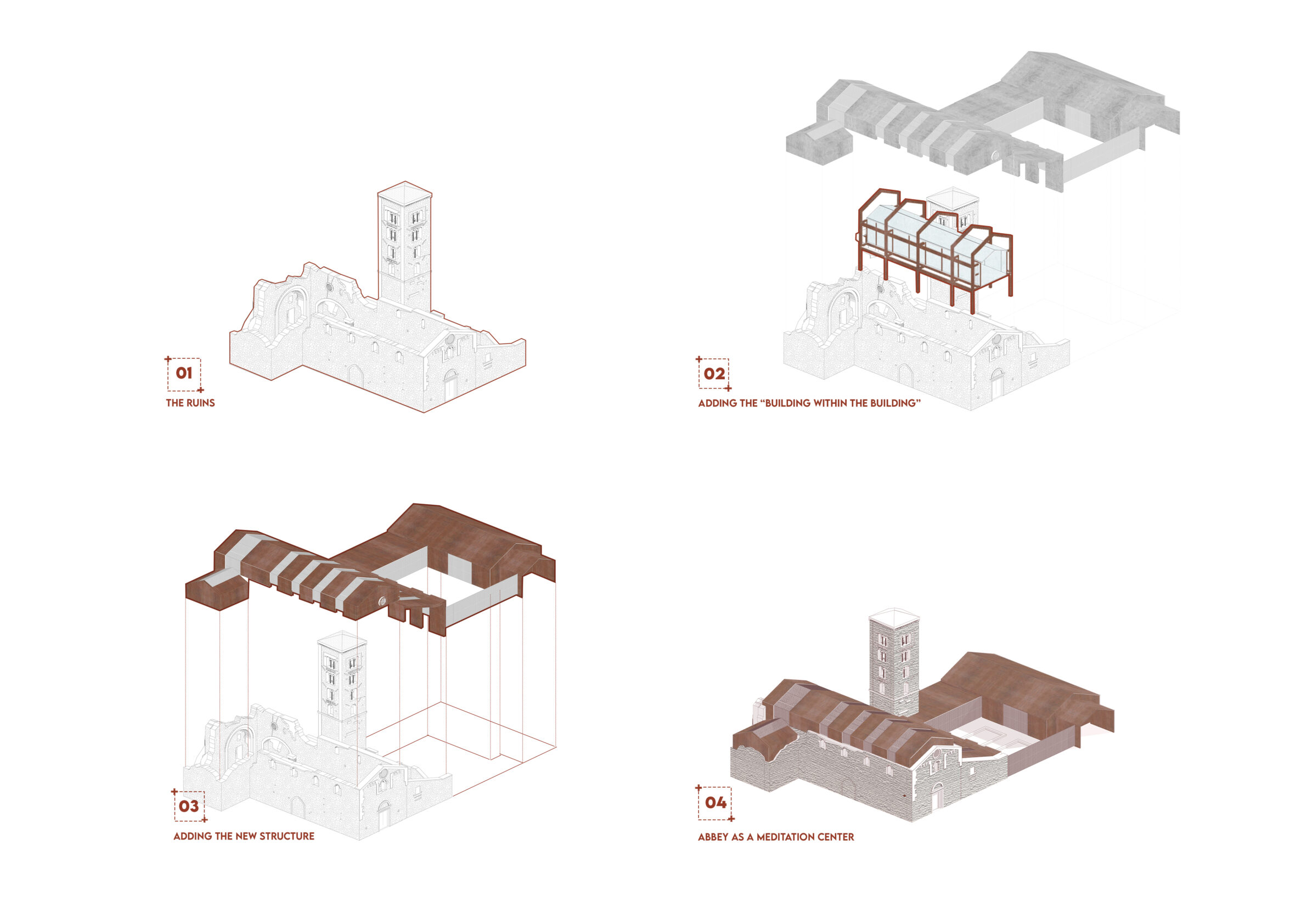
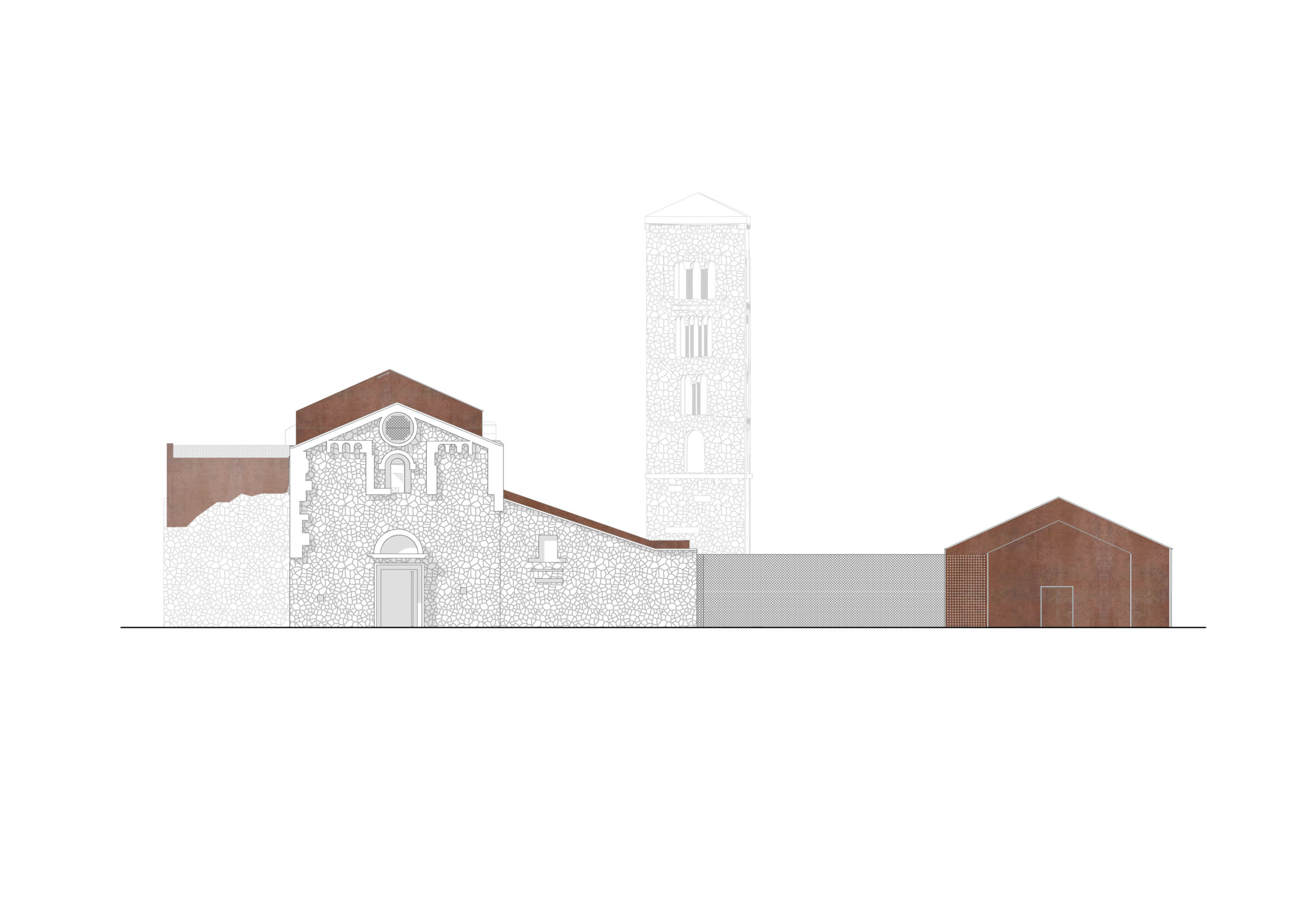
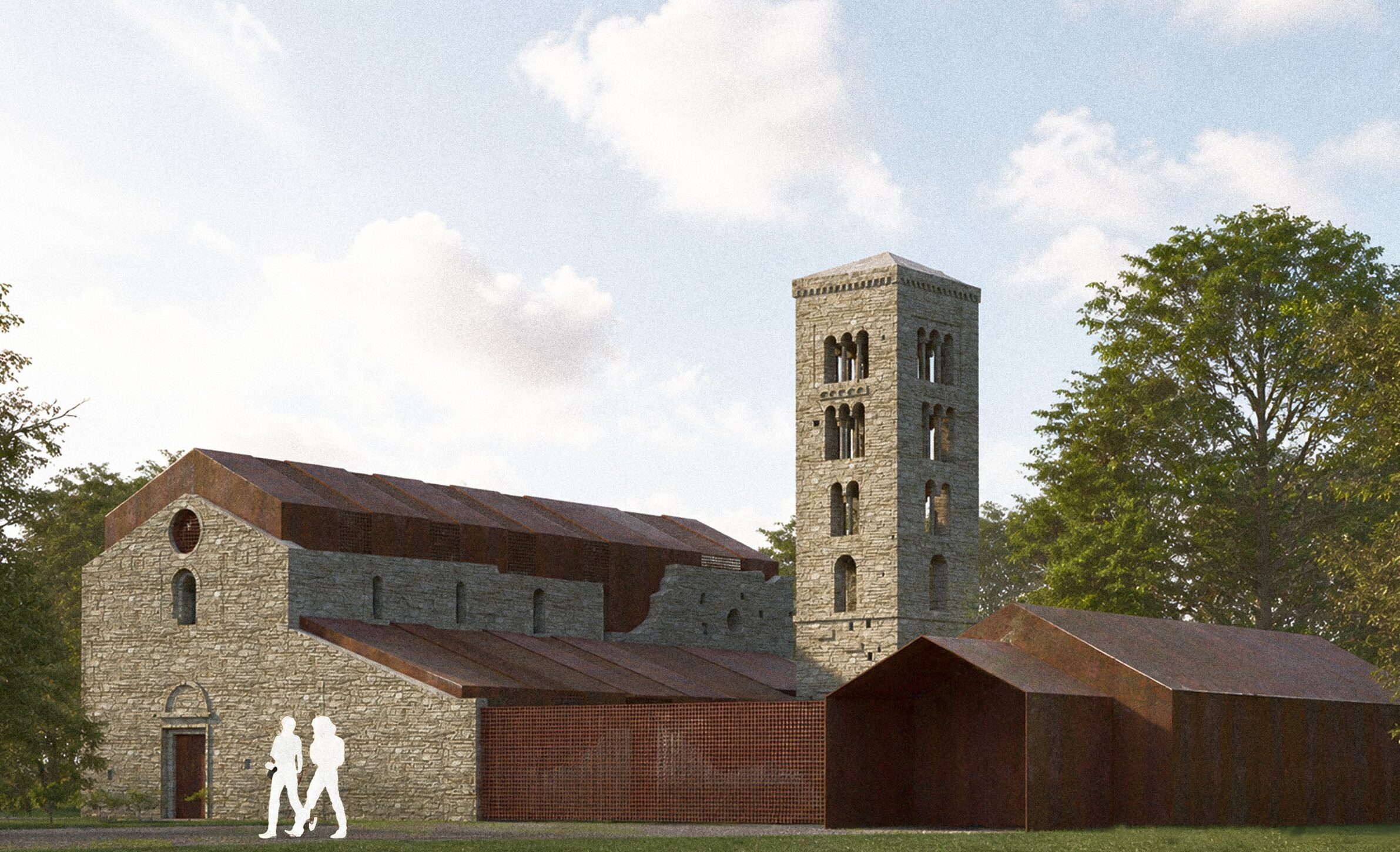
The adaptive reuse of Santa Maria del Piano Abbey reimagines the site as a sanctuary for meditation and collective reflection. Rather than a traditional restoration, the intervention treats the abbey as a living ruin, where traces of decay and time remain visible.
The design employs a “building within a building” strategy, inserting a lightweight contemporary structure into the existing shell. This preserves spatial memory while establishing a dialogue between historic permanence and modern change. Spatially, the project balances subtraction and insertion; select areas remain open to the sky, while others form intimate environments for introspection.
Light serves as the primary tool, filtered to create a contemplative atmosphere. As a meditation center, the abbey supports individual reflection and communal life. The project does not dominate the ruin but completes it, allowing past and present to coexist.
Team: Bardhë Pireva, Duarza Ivanja, Irenë Llapashtica
SYMBIONEST
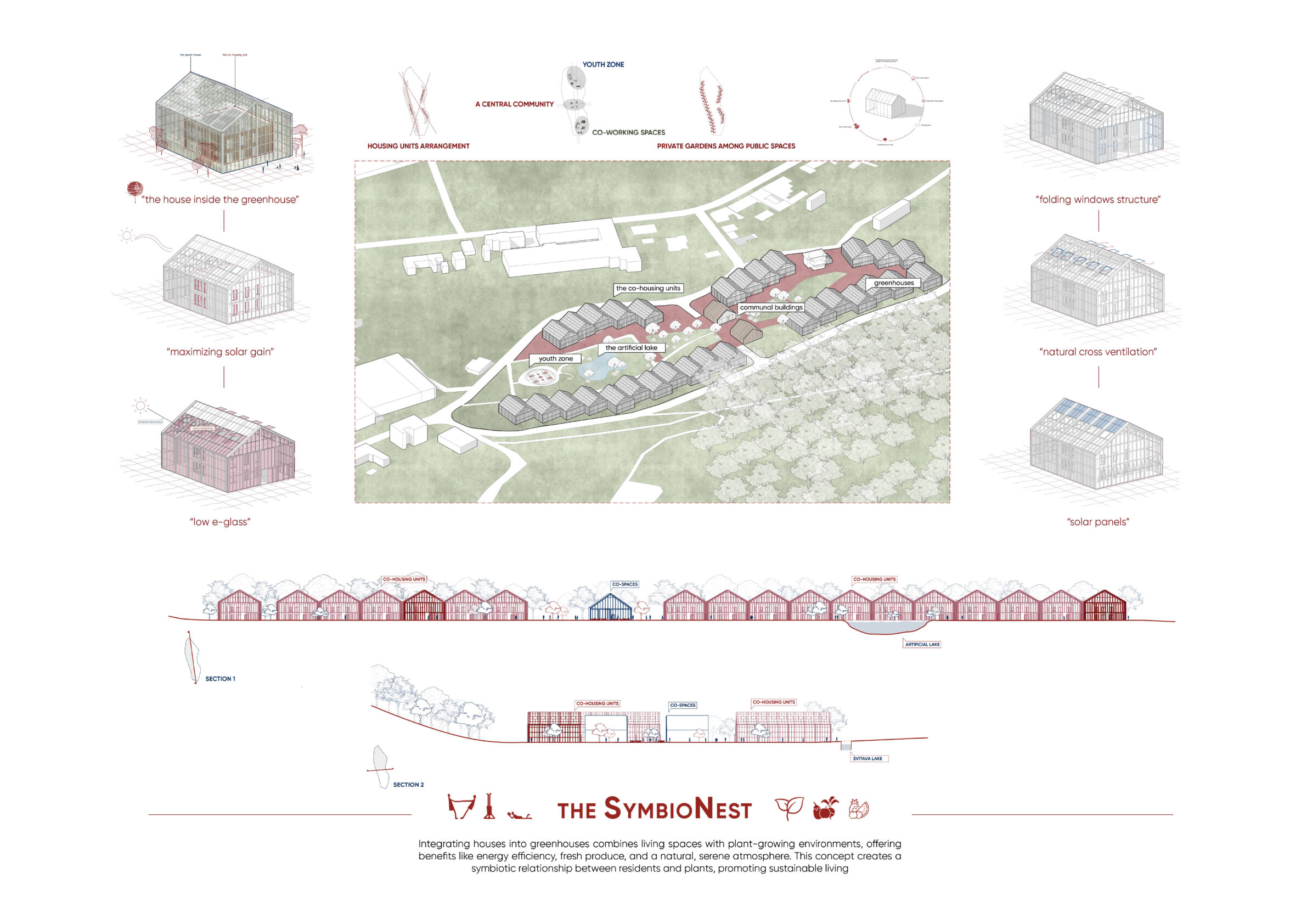
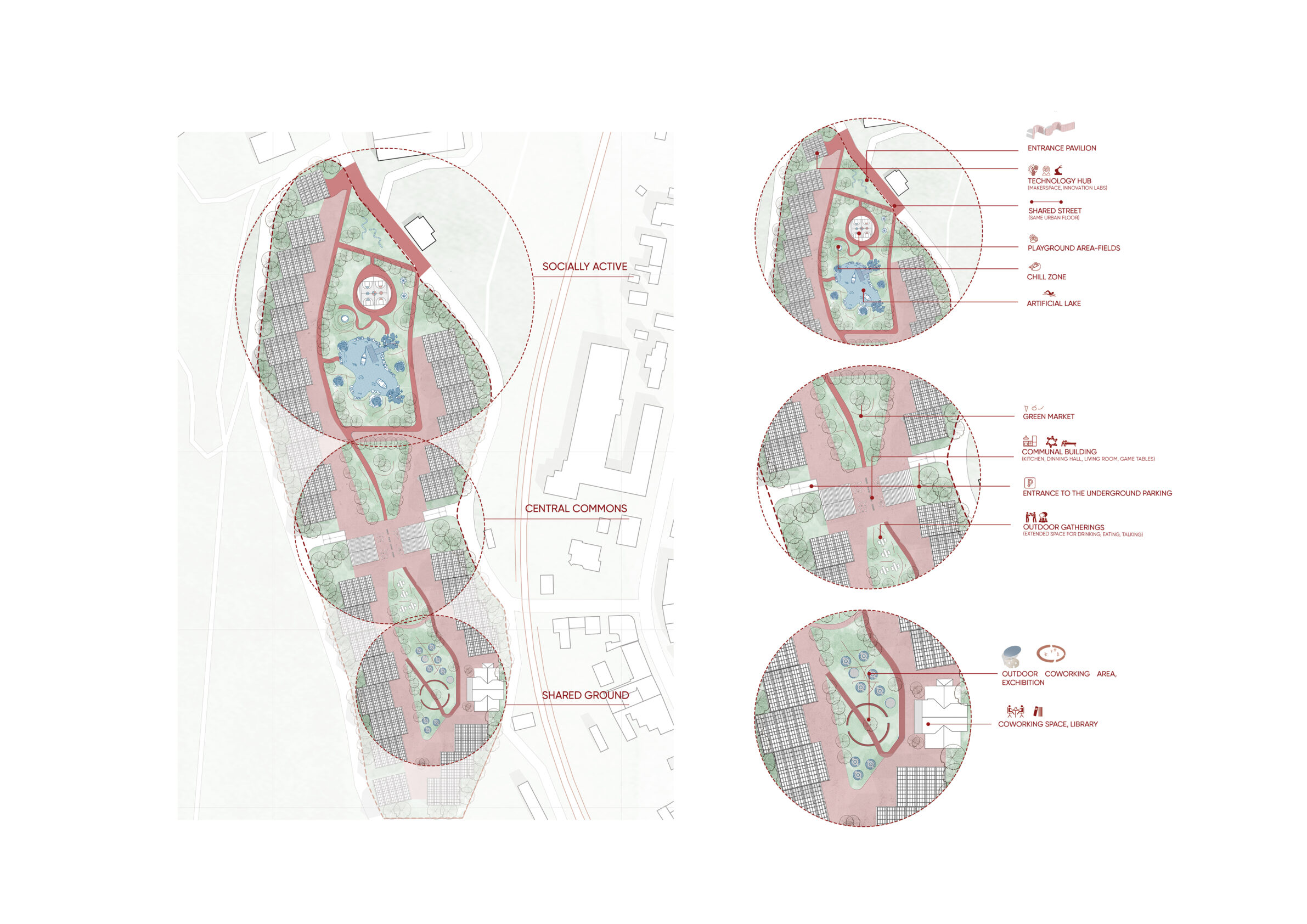
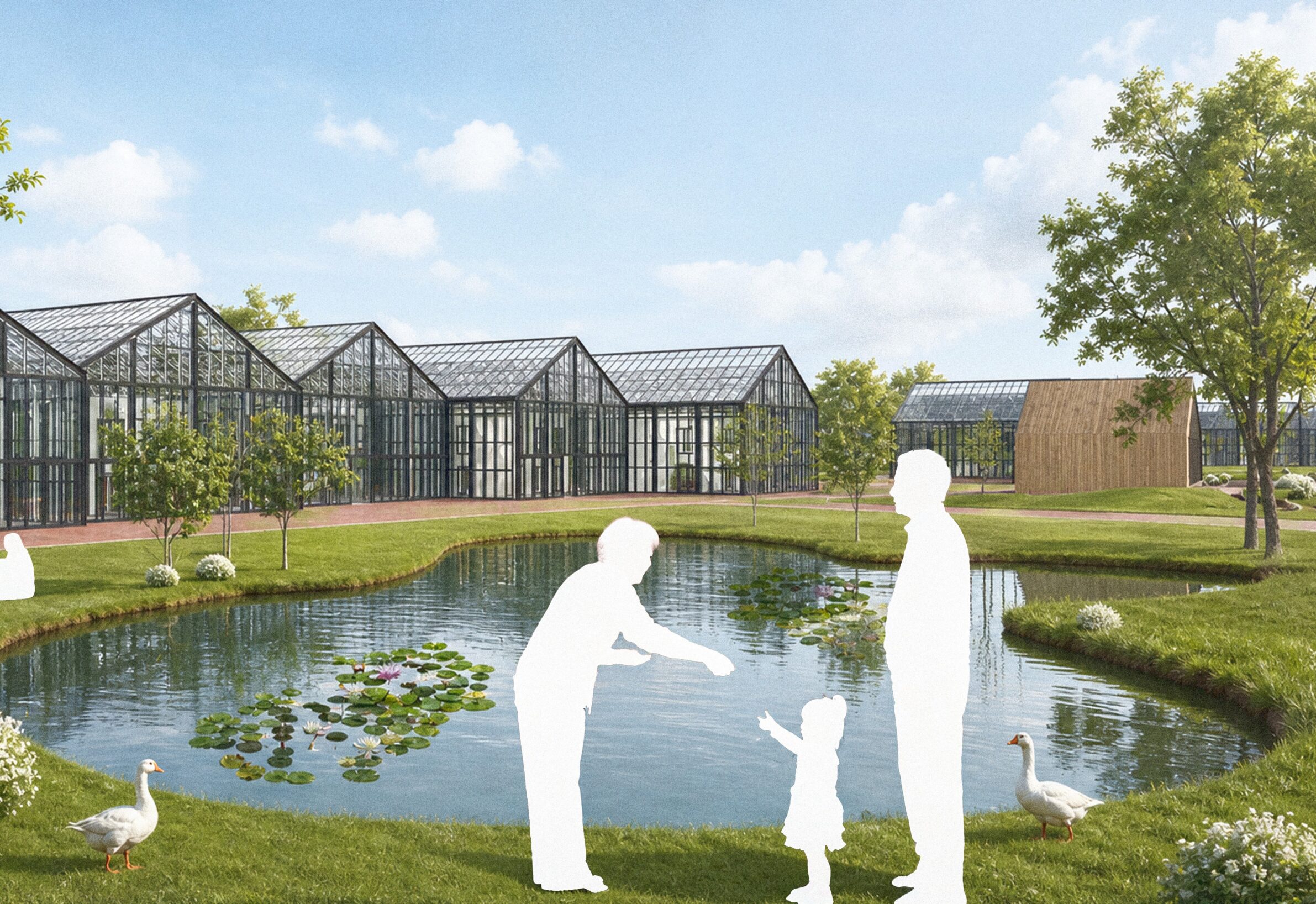
This sustainable village proposal for Brněnec organizes homes along the perimeter, each integrated within a greenhouse that boosts energy efficiency and strengthens the connection to nature. The center is preserved as an open communal space where existing buildings are reactivated for social functions. Two central co-spaces act as hubs for dining and recreation, while an artificial lake, pavilions, and a green market create a vibrant public core.
The housing combines passive design with modern architecture, utilizing the greenhouses for summer ventilation and winter insulation. Private living is contained within these units, while public life extends across the village to encourage interaction. Underground parking frees the surface for communal use, ensuring a pedestrian-friendly environment.
The project respects the site's historical context while proposing a self-sufficient, environmentally integrated model of living.
Team: Bardhë Pireva, Duarza Ivanja
URBAN SHRINKAGE AND THE FUTURE OF SMALL CITIES: THE CASE OF KAMENICA (MASTER’S THESIS)
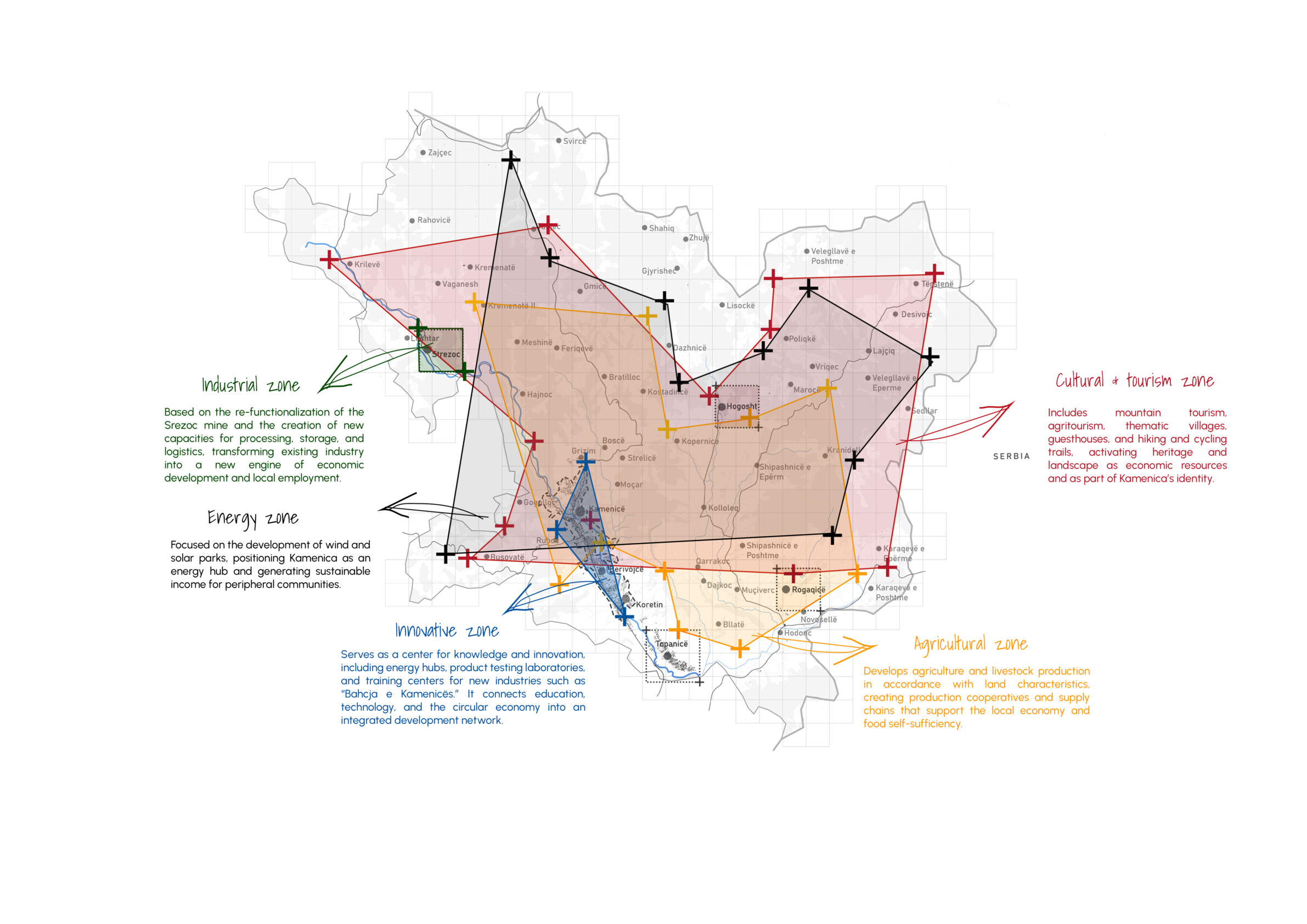
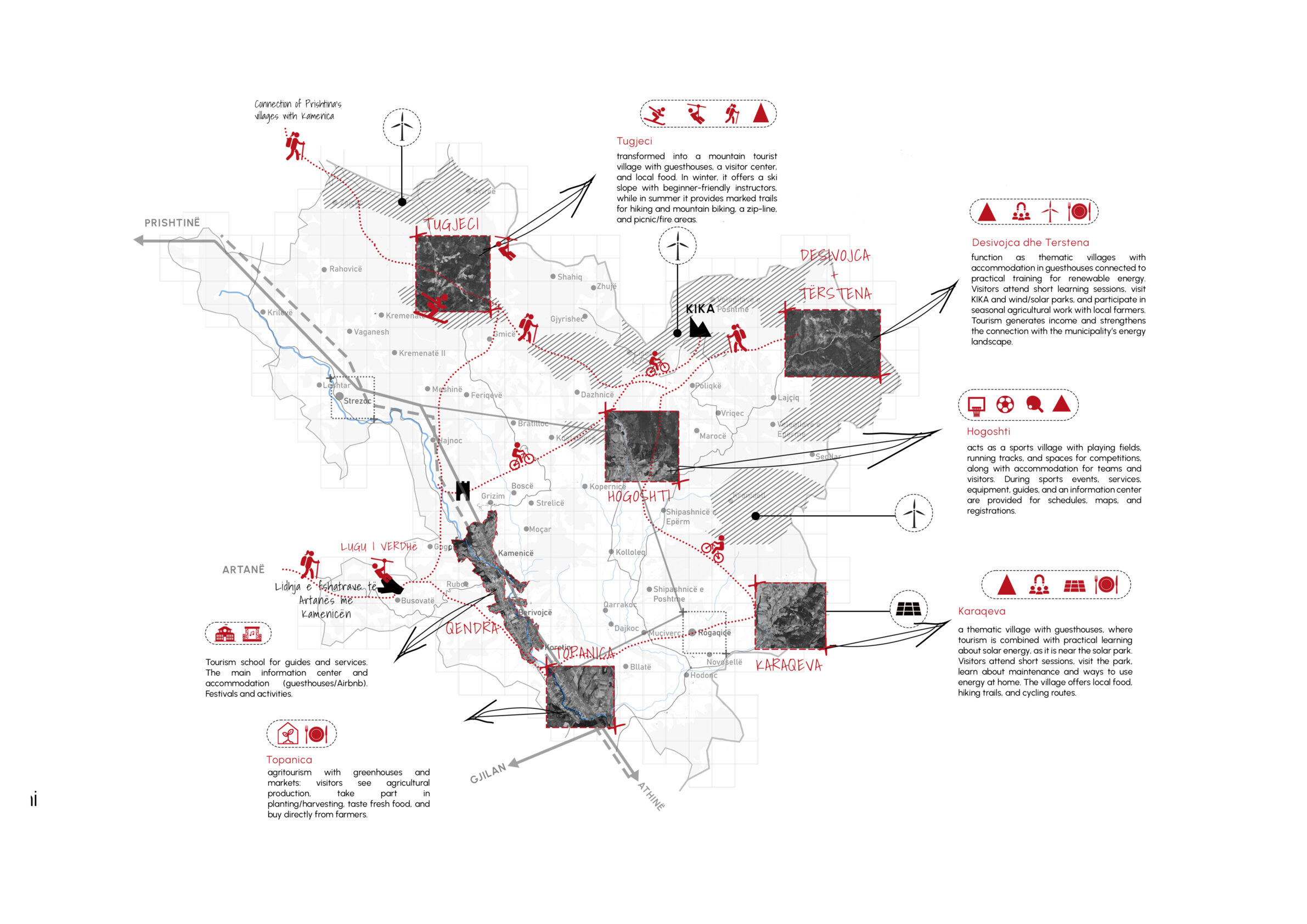
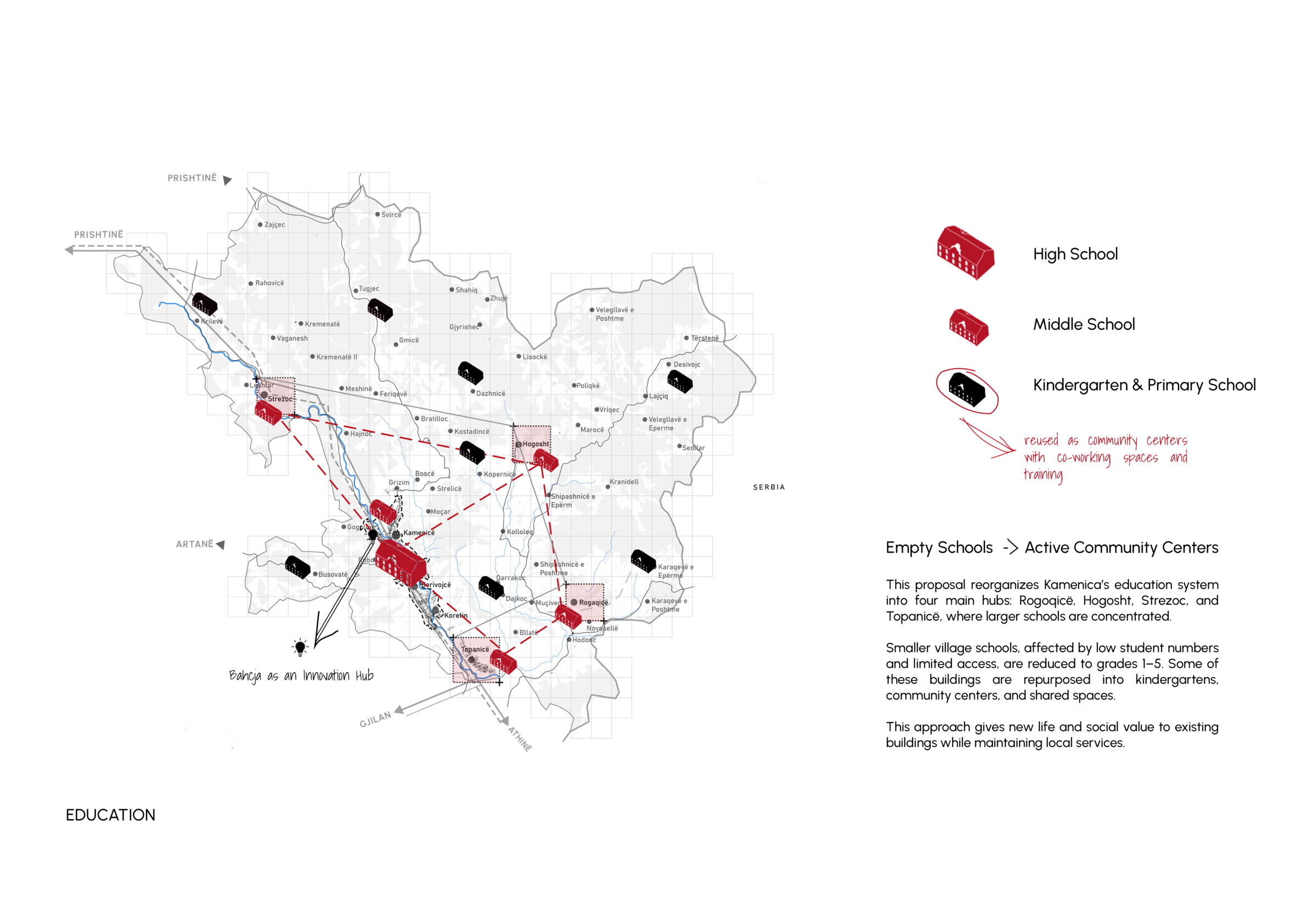
Kamenica is navigating a profound crisis of depopulation, having lost approximately 36.6% of its residents since 2011. This project proposes a strategic framework for "Smart Shrinkage" across the entire municipality, focusing on right-sizing the territory to fit its actual population while enhancing the quality of life for those who remain. The "Local Loop" strategy serves as the foundation for this transformation, prioritizing municipal resilience and self-sufficiency.
The vision achieves local independence through economic autonomy via local food cycles and energy sovereignty through renewable sources. The project reorganizes public services and infrastructure at the municipal level to match current population density, ensuring that resources remain efficient and sustainable. Furthermore, the plan leverages the municipality's full potential in tourism by activating natural and cultural assets as drivers for regional revitalization. By identifying and infilling "spatial gaps," the project creates a resilient, well-connected network that serves as a blueprint for navigating regional depopulation through local autonomy.
Bardhë Pireva
A 23-year-old architect from Kosovo, I completed my Master’s degree at the University of Pristina in late 2025. My professional development began well before graduation, driven by a constant need to challenge myself. Alongside my studies, I was actively involved in local and international projects, gaining early exposure to different contexts and ways of working. This proactive approach, combined with an Erasmus exchange and participation in international competitions, allowed me to navigate diverse design cultures and complex frameworks from an early stage.
I now work as a junior architect and planner in Pristina, approaching the built environment as something to be understood rather than simplified. Maps, data, and spatial analysis are an integral part of my process, helping me uncover patterns and read the deeper, often overlooked layers of a place. Since entering professional practice, I have focused on building an approach that balances analytical precision with a sensitive, human-centered perspective.
Curious and observant by nature, I am drawn to projects that require questioning, exploring, and rethinking. My work reflects an ongoing interest in architecture that is thoughtful, grounded, and responsive to the realities it engages with.
Contact
bardhapireva@gmail.com
Powered by